


In this article, you'll learn how a juice cleanse differs from alkaline fasting, what goals each approach is associated with, and which type of fasting is right for you.
We'll explain:
- How does a juice cleanse differ from alkaline fasting?
- What goals does each one pursue?
- Which type of fasting is right for me?
How does a juice cleanse differ from alkaline fasting?
Both a juice cleanse and alkaline fasting are dietary approaches that aim to cleanse and revitalize the body. However, they differ in their underlying principles and goals.
A juice cleanse involves consuming pressed fruit and vegetable juices for a set period, often a few days to a week. During this time, you consume only these juices and avoid solid food. The idea behind a juice cleanse is to give your digestive system a break while continuing to provide your body with important nutrients from the juices.
Alkaline fasting is a dietary approach that focuses on alkaline foods. These are foods that contain high levels of alkaline minerals such as potassium, magnesium, and calcium. The aim of alkaline fasting is to balance the body's acid-alkaline balance, as excess acidity is sometimes associated with various health problems. During a period of alkaline fasting, people consume more fruit, vegetables, herbs, nuts, and seeds. Acid-forming foods such as meat, dairy products, refined sugar, and caffeine are reduced or avoided.

What goals does each one pursue?
A juice cleanse is often used to focus consciously on a liquid diet for a limited period and to restructure everyday eating habits. Since you generally consume fewer calories during a juice fast than you would with your usual diet, your body weight may change in the short term. A juice cleanse can also help you become more attuned to your sense of taste and reflect more consciously on your consumption of highly processed foods. The aim is often to give your body a break from its usual intake of solid food and to take a closer look at your own eating habits.
Alkaline fasting focuses more on plant-based, alkalizing foods. This dietary approach is often chosen to encourage more mindful food choices and a greater focus on natural, unprocessed ingredients. Many people use alkaline fasting as an opportunity to question their existing eating habits and make more balanced choices in the long term. The focus is less on short-term effects and more on a considered approach to nutrition.
Alkaline fasting focuses more on plant-based, alkalizing foods. This dietary approach is often chosen to encourage more mindful food choices and a greater focus on natural, unprocessed ingredients. Many people use alkaline fasting as an opportunity to question their existing eating habits and make more balanced choices in the long term. The focus is less on short-term effects and more on a considered approach to nutrition.
Which type of fasting is right for me?
Whether a juice cleanse or alkaline fasting is best for you needs to be assessed individually. This depends, among other things, on your personal circumstances and goals. In general, a juice cleanse is particularly suitable in the short term and can be easily incorporated into your daily routine. Alkaline fasting involves avoiding acidic foods. This requires a thorough understanding of the acidic or alkaline properties of foods and therefore takes a little more time.
In general, it is also possible to combine alkaline fasting with a juice cleanse, as many fruits and vegetables are alkaline foods that can be consumed in juice form. These are also included in our DALUMA juice cleanses!
In general, it is also possible to combine alkaline fasting with a juice cleanse, as many fruits and vegetables are alkaline foods that can be consumed in juice form. These are also included in our DALUMA juice cleanses!

Our recommendation for you:
With juice cleanses from DALUMA, you can give your body a holistic reset. Our juices were developed by experts with a holistic understanding of the body to create an optimal composition of macronutrients such as carbohydrates and proteins. Their particularly high concentration of micronutrients in the form of vitamins, minerals, trace elements and antioxidants also supports their function as biocatalysts for metabolic and cell formation processes in the body, enhancing the holistic regenerative effect. Thanks to the special cold-pressing process, all ingredients are preserved as effectively as possible. This ensures that you get all the essential vitamins and minerals during your juice cleanse.
Our juices also contain no harmful or toxic substances that could interfere with the desired effects of the juice cleanse. Pesticides and fungicides used in conventional agriculture can negatively affect all cellular and metabolic processes. That’s why organic quality is a must for us, to protect the environment and the body holistically. We also deliberately avoid petroleum-based plastic products, using only biodegradable polymers (PLA) made from renewable resources, which have a significantly reduced environmental footprint: good for your body, good for the environment!
Our juices also contain no harmful or toxic substances that could interfere with the desired effects of the juice cleanse. Pesticides and fungicides used in conventional agriculture can negatively affect all cellular and metabolic processes. That’s why organic quality is a must for us, to protect the environment and the body holistically. We also deliberately avoid petroleum-based plastic products, using only biodegradable polymers (PLA) made from renewable resources, which have a significantly reduced environmental footprint: good for your body, good for the environment!
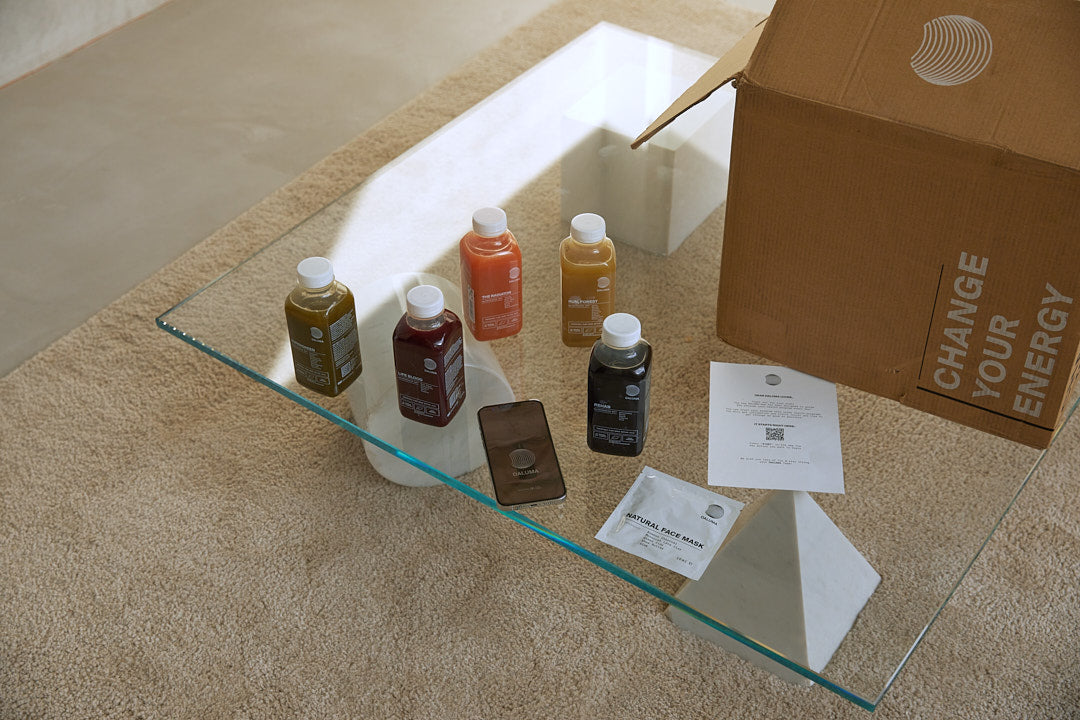
Conclusion
Both juice fasting and alkaline fasting are dietary approaches that focus on making more conscious choices and reducing daily food intake. The methods and their associated priorities differ. While a juice cleanse involves a time-limited liquid diet and is often used to reflect on eating habits and simplify digestion, alkaline fasting focuses more on choosing predominantly plant-based, alkaline-forming foods.
Which form of fasting you prefer depends on your individual circumstances and personal goals. DALUMA juice cleanses consist of carefully selected, predominantly plant-based ingredients and have been developed with a holistic approach that considers various aspects of nutrition. They stand out for their balanced macronutrient composition, diverse range of micronutrients, the organic quality of the ingredients used, and the gentle cold-pressing process, which best preserves the ingredients’ natural properties. All juices are bottled in packaging made from polymers (PLA) derived from renewable resources - for a mindful juice cleanse with the environment and quality in mind.
Which form of fasting you prefer depends on your individual circumstances and personal goals. DALUMA juice cleanses consist of carefully selected, predominantly plant-based ingredients and have been developed with a holistic approach that considers various aspects of nutrition. They stand out for their balanced macronutrient composition, diverse range of micronutrients, the organic quality of the ingredients used, and the gentle cold-pressing process, which best preserves the ingredients’ natural properties. All juices are bottled in packaging made from polymers (PLA) derived from renewable resources - for a mindful juice cleanse with the environment and quality in mind.
Sources
https://www.lavita-magazin.de/basenfasten
https://www.thieme.de/de/ernaehrung/basenfasten-was-ist-das-9726.htm
https://www.zentrum-der-gesundheit.de/bibliothek/abnehmen/fasten-uebersicht/basenfasten
https://www.thieme.de/de/ernaehrung/basenfasten-was-ist-das-9726.htm
https://www.zentrum-der-gesundheit.de/bibliothek/abnehmen/fasten-uebersicht/basenfasten
DISCOVER OUR BESTSELLERS


FREQUENTLY ASKED QUESTIONS
WHICH HABITS OR FOODS SHOULD I AVOID DURING THE JUICE CLEANSE?
Avoid solid foods, highly processed foods, sugary drinks, alcohol, and nicotine during the cleanse. Heavy, fatty, or very rich foods should also be avoided — especially before and after the cleanse. These foods put a lot of strain on the body and can reduce or even reverse the positive effects of the cleanse.
HOW IMPORTANT IS IT TO DRINK ENOUGH FLUIDS — AND WHAT COUNTS?
Very important: In addition to juices, water and unsweetened herbal tea are essential for maintaining fluid balance and supporting metabolism. Drinking enough fluids helps transport nutrients efficiently and flushes the body — supporting a feeling of lightness and well-being during the juice cleanse.
WHEN IS A JUICE CLEANSE NOT RECOMMENDED — AND WHEN SHOULD YOU BE CAUTIOUS?
A juice cleanse isn’t ideal for every situation — if you’re unwell, under a lot of stress, physically overexerting yourself, pregnant, or breastfeeding, a cleanse may be too restrictive or demanding. Caution is also advised if you have high energy or nutrient needs (e.g., intense exercise or muscle building). In these cases, a gentler, balanced diet is preferable.
HOW CAN I MAXIMIZE MY CHANCES OF HAVING A POSITIVE CLEANSE EXPERIENCE?
Listen to your body — if you feel tired, lightheaded, or unwell, take a break. Combine your juice cleanse with plenty of rest, sleep, and gentle exercise — rather than strenuous activity.Choose high-quality ingredients: lots of fresh fruit and vegetables, and juices that are as natural as possible, with no additives.Plan ahead: prepare your body and give yourself time after the cleanse to gradually return to your normal diet.