


Proteins are considered the foundation of every healthy diet - but when it comes to true longevity, there’s more to consider than just protein content. Current research and expert knowledge show:
It’s not the quantity, but the type of protein that matters - for recovery, cell protection, and lasting vitality.
WHY PROTEIN PLAYS A KEY ROLE IN THE AGING PROCESS
Proteins are far more than building blocks for muscles - they are essential molecules for cell repair, hormone production, immune function, and maintaining muscle mass, especially as we age.
As we age, the body becomes less able to metabolize proteins efficiently - while the need for certain amino acids increases. Particularly important are leucine, methionine, glycine, and tryptophan, which play a role in cellular repair, mitochondrial function, and reducing inflammation, among other things.
As we age, the body becomes less able to metabolize proteins efficiently - while the need for certain amino acids increases. Particularly important are leucine, methionine, glycine, and tryptophan, which play a role in cellular repair, mitochondrial function, and reducing inflammation, among other things.
WHAT REALLY MATTERS IN A LONGEVITY PROTEIN
According to current findings in longevity research, a protein’s biological efficacy depends not only on its source but also, to a significant extent, on its amino acid composition, availability, and functional interactions. A high-quality protein designed to support healthy aging meets several biochemically relevant requirements:
A key criterion is the complete spectrum of proteinogenic amino acids, of which 20 are known in total. Nine are considered essential - including leucine, lysine, methionine, threonine, and tryptophan - because the human body cannot synthesize them itself, so they must be obtained entirely through the diet.
Only proteins with a complete amino acid profile enable effective muscle protein synthesis, support cellular repair processes, and maintain metabolic homeostasis, particularly during catabolic life stages such as aging, stress, or illness.
In addition, bioavailability is a decisive factor in a protein’s functionality. It describes the extent to which the amino acids consumed become systemically available after digestion and absorption and can act on target structures. Highly bioavailable proteins are characterized by good solubility, enzymatic accessibility, and a favorable absorption rate in the gut - all essential factors for effective use in the context of longevity.
Secondary plant compounds (e.g., polyphenols, flavonoids) and natural enzymes work in tandem to improve protein digestion, provide antioxidant protection, and modulate inflammation. These synergistic active-compound complexes help reduce chronic low-grade inflammation – a key feature of so-called “inflammaging” – and promote cellular resilience.
In summary, it is important to consider not only protein quality, but also its biochemical behavior in the body. In particular, the combination of:
THE SPECIAL ROLE OF METHIONINE
The amino acid methionine receives particular attention in longevity research. As an essential, sulfur-containing amino acid, methionine performs a variety of functions in the body, including DNA methylation, protein synthesis, and detoxification through sulfur metabolism.
However, studies show that consistently high methionine intake, particularly from animal protein sources such as red meat, eggs, dairy products, or whey protein, is associated with increased activation of growth-promoting signaling pathways such as mTOR and IGF-1. While these pathways support cell growth and building processes in the short term, over the long term they can promote cellular aging, oxidative stress, and inflammation.
Methionine restriction, meaning a targeted reduction of this amino acid through diet, has been linked in numerous animal models to a longer lifespan, improved metabolic function, and a lower risk of chronic degenerative diseases.
Plant-based proteins such as pea, rice, or hemp protein naturally contain less methionine, offering a key advantage for healthy aging: They provide enough essential amino acids for recovery without continuously overstimulating growth-promoting signaling pathways – a key aspect of DALUMA’s anti-aging approach.

DALUMA’S PERSPECTIVE ON CHOOSING THE RIGHT PROTEIN
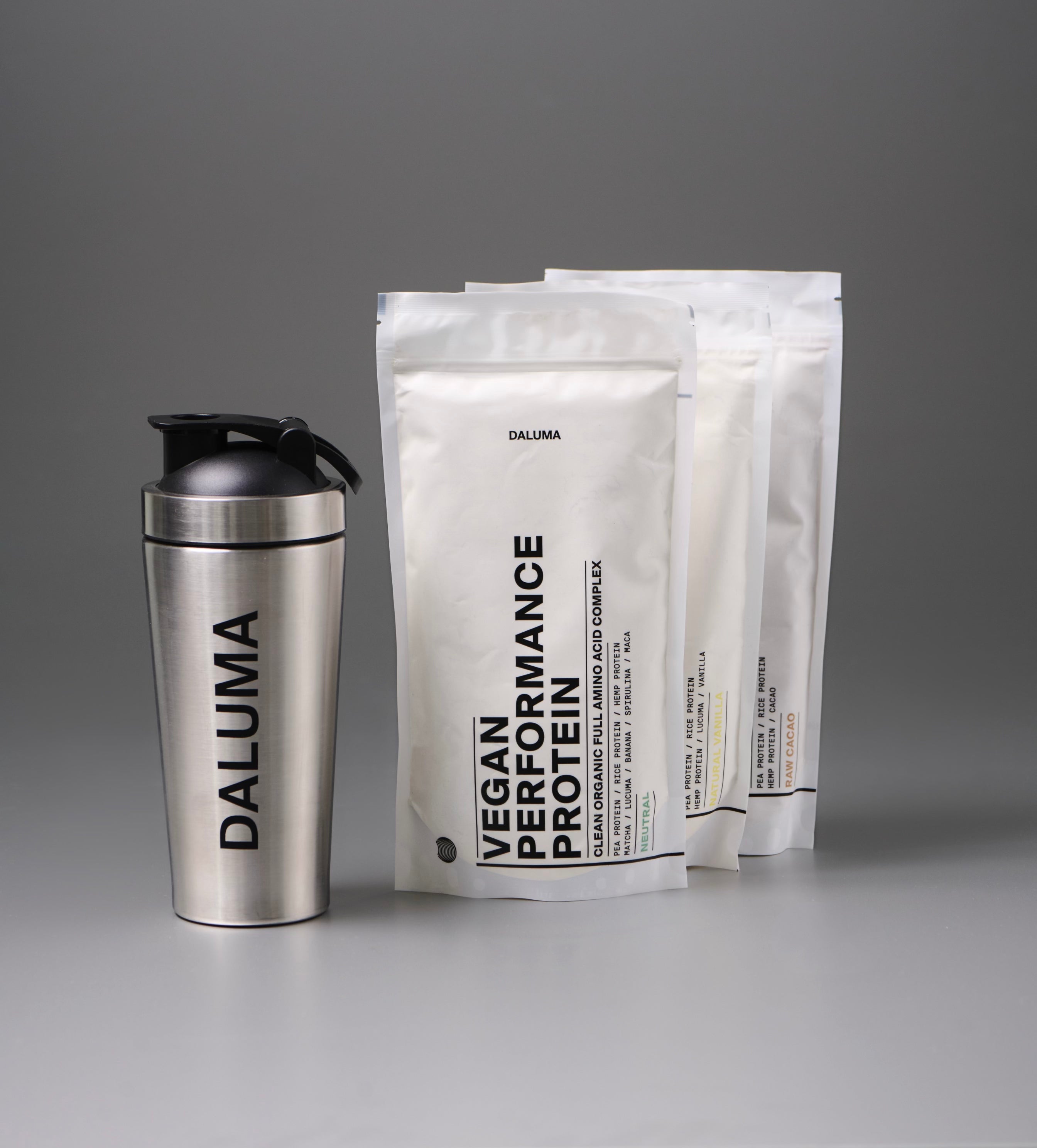
Our plant-based Vegan Performance Proteins are formulated not only to support muscle recovery, but also to fit into a longevity-focused lifestyle.
The combination of high-quality hemp, pea, and rice proteins creates a complete, entirely plant-based protein source with high bioavailability. It provides all essential amino acids and specifically supports natural protein synthesis, muscle recovery, and cellular repair processes – without hormonal imbalances or skin-related side effects.
The combination of high-quality hemp, pea, and rice proteins creates a complete, entirely plant-based protein source with high bioavailability. It provides all essential amino acids and specifically supports natural protein synthesis, muscle recovery, and cellular repair processes – without hormonal imbalances or skin-related side effects.
Benefits at a glance:
- Complete amino acid profile – fully sufficient as a sole protein source
- Quickly absorbed & easy to digest – without bloating or clumping
- 100% plant-based, free from sugar, artificial flavors & additives
- Supports metabolism, skin & liver function at a functional level
- Adaptogens such as ashwagandha & ginseng promote resilience, concentration & energy
- Additional micronutrients from maca, lucuma, matcha & spirulina for antioxidant cell protection
Sources
- Deutz, N. E. P., Wolfe, R. R., & Biolo, G. (2014). Protein intake and exercise for optimal muscle function with aging: Recommendations from the ESPEN Expert Group. Clinical Nutrition, 33(6), 929–936. https://doi.org/10.1016/j.clnu.2014.04.007
- Wu, G. (2009). Amino acids: Metabolism, functions, and nutrition. Amino Acids, 37(1), 1–17. https://doi.org/10.1007/s00726-009-0269-0
- Valenzuela, R., Videla, L. A., & Tapia, G. (2020). Polyphenols in plant-based diets: Effects on inflammation and oxidative stress in aging. Nutrients, 12(2), 486. https://doi.org/10.3390/nu12020486
- Levine, M. E., Suarez, J. A., & Brandhorst, S. (2021). Protein intake and longevity: Lessons from animal models and humans. Cell Metabolism, 33(10), 1903–1919. https://doi.org/10.1016/j.cmet.2021.07.010
- Phillips, S. M. (2017). Current concepts and unresolved questions in dietary protein requirements and supplements in adults. Frontiers in Nutrition, 4, 13. https://doi.org/10.3389/fnut.2017.00013
- Fontana, L., & Kennedy, B. K. (2014). Promoting health and longevity through diet: From model organisms to humans. Cell, 161(1), 106–118. https://doi.org/10.1016/j.cell.2015.02.020
- López-Otín, C., Blasco, M. A., Partridge, L., Serrano, M., & Kroemer, G. (2013). The hallmarks of aging. Cell, 153(6), 1194–1217. https://doi.org/10.1016/j.cell.2013.05.039
- Li, P., Yin, Y.-L., Li, D., Kim, S. W., & Wu, G. (2007). Amino acids and immune function. British Journal of Nutrition, 98(2), 237–252. https://doi.org/10.1017/S000711450769936X
- DALUMA GmbH. (2024). Vegan Performance Protein, Neutral Flavor. https://www.daluma.de/products/vegan-performance-protein-neutral
FREQUENTLY ASKED QUESTIONS
WHAT ROLE DOES PROTEIN PLAY IN LONGEVITY AND LASTING HEALTH?
Protein supports nearly all key processes in the body—from cell repair and muscle maintenance to immune function and metabolism. An adequate intake of high-quality protein helps stabilize bodily functions over the long term and counteract age-related decline.
WHAT REALLY MATTERS WHEN IT COMES TO PROTEIN QUALITY?
The amino acid profile and bioavailability are crucial. Proteins fully support recovery, structural development, and energy processes only when they contain all essential amino acids and the body can absorb them well. Plant-based protein sources can be especially valuable in this regard when they are high quality and easy to digest.
WHICH PROTEIN SOURCES SUPPORT A LONGEVITY-ORIENTED LIFESTYLE?
High-quality plant proteins that are rich in essential amino acids and easily metabolized are ideal. They put less strain on the body, provide pure building blocks for energy, and support a balanced, healthy diet over the long term.
HOW CAN YOU INCLUDE PROTEIN IN YOUR DAILY ROUTINE TO GET THE MOST OUT OF ITS BENEFITS?
Consistency is key: spreading protein intake evenly throughout the day—combined with fresh, nutrient-rich foods, sufficient fluids, and exercise—provides lasting support for muscles, cells, and energy balance.
ARE THERE TYPICAL MISTAKES WHEN IT COMES TO PROTEIN AND LONGEVITY?
Yes—many people focus exclusively on quantity and ignore quality, source, or combinations with other nutrients. Without a balanced diet, sufficient sleep, and exercise, protein cannot deliver its full benefits. An unbalanced intake or low-quality sources offer little long-term benefit.
HOW DOES THE BODY BENEFIT FROM A LONGEVITY-FOCUSED APPROACH TO PROTEIN?
A high-quality, well-designed protein intake can stabilize muscles and tissues, accelerate recovery, harmonize metabolism, and support the immune system. Protein therefore promotes not only fitness, but also a sustainable, vibrant quality of life.